Helping every child find their way to play: Making play accessible with Kalamunda Toy Library
By Emily Bruining and Staci Grant
Senior Occupational Therapists | Western Kids Health
Our Shared Vision
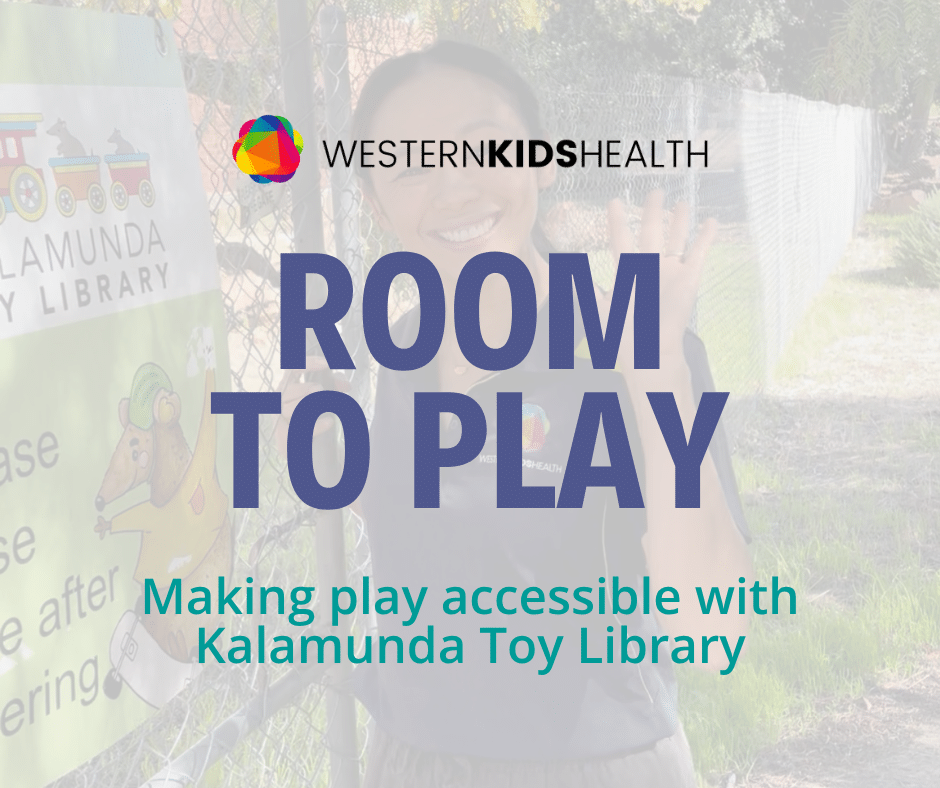
Western Kids Health has had the recent pleasure of working with the Kalamunda Toy Library as part of Toy Library Australia’s Disability Access Inclusion and Support Program.
Kalamunda Toy Library approached Western Kids Health with the goal of auditing their toy collection. Our Senior Occupational Therapists approached the project from the perspective that for children, play IS the goal.
Our collective vision was to enable children and families of all skills, abilities and needs to navigate and find toys that suit their abilities. As therapists, we know that many toys are already accessible, but with small tweaks we can increase engagement for more children.
How we assessed each toy
Toys were assessed with a view to considering whether people with different accessibility requirements could use each toy independently and for its intended purpose.
Our Senior Occupational Therapists reviewed a selection of Kalamunda Toy Library’s toys and assessed each toy’s accessibility. We started off focusing on Role Play toys, considering whether a toy was usable by:
Making toys easy to find
We developed a simple system to categorise toys so families can easily search and locate toys that suit their accessibility needs, whether they’re browsing in the library or searching the toy library’s online catalogue.
Every toy has a place
Many toys were deemed accessible in more than one category. It is important to remember that a lack of accessibility does not make a “bad” toy – different toys are vital for the development of different skills and resonate with different children’s interests.
An important message for parents, childcare centres and educators alike: some of the most accessible toys were the simplest (and sometimes, the cheapest!)
Supporting play at home
We wanted to go beyond access and consider how we could support caregivers to enhance their child’s skill development through play. We developed resources including:
- Social stories to accompany play kits for commonly tricky situations, such as a Visiting the Dentist social story to go alongside the Dentist play kit
- Play prompt and idea sheets with information and suggestions to support caregivers to play with their child at their child’s play stage
- Information handouts developed by our team of Occupational Therapists, Speech Pathologists and Physiotherapists with recommendations for toy and play ideas across a range of developmental areas
Changes at the library
Kalamunda Toy Library is dedicated to supporting visibility of a range of needs and commissioned the sewing of accessible dolls clothes, introduced a sensory toy trolley and timers, and reviewed the seating available at the library for visiting members.
More conversations about play
Kalamunda Toy Library’s most welcome feedback was the increase in conversations members are having about disability and the different ways people play!
We look forward to continuing our work with Kalamunda Toy Library, with the next stage focusing on refining the auditing process and upskilling volunteers to audit the remaining toy catalogue. We are excited to see this important work grow.
Play is for every child, and together,
we’re helping every child find their way to it.